
WHY STELLA ARTOIS' ‘CLAUSTROBARS’ CAMPAIGN WORKS SO WELL
The power of embracing uncomfortable truths
At Wonderworks, we're fascinated by the campaigns that feel less like advertising and more like observations about everyday life. And this month we’re having a beer moment…
In this week’s blog, we explore why Stella Artois' ‘Claustrobars’ campaign is exactly that.

It’s one of those advertising campaigns that seems incredibly obvious once you've seen it.
Which is usually a sign that somebody has uncovered a genuine human insight.
Because let's be honest. Most of us have had that moment.
You walk into a pub on a Friday evening and immediately wonder why you bothered.
It's too loud. Too busy. You're squeezed between strangers trying to order a drink, wondering whether it's worth staying at all.
It’s a feeling many brands would choose to ignore.
Advertising tends to present socialising as effortless: perfectly lit bars, endless space, beautiful people laughing without interruption.
It's an idealised version of going out that rarely reflects reality. Stella Artois does something far more interesting.
It acknowledges the discomfort.
And instead of trying to fix it, it simply says...
It's worth it.
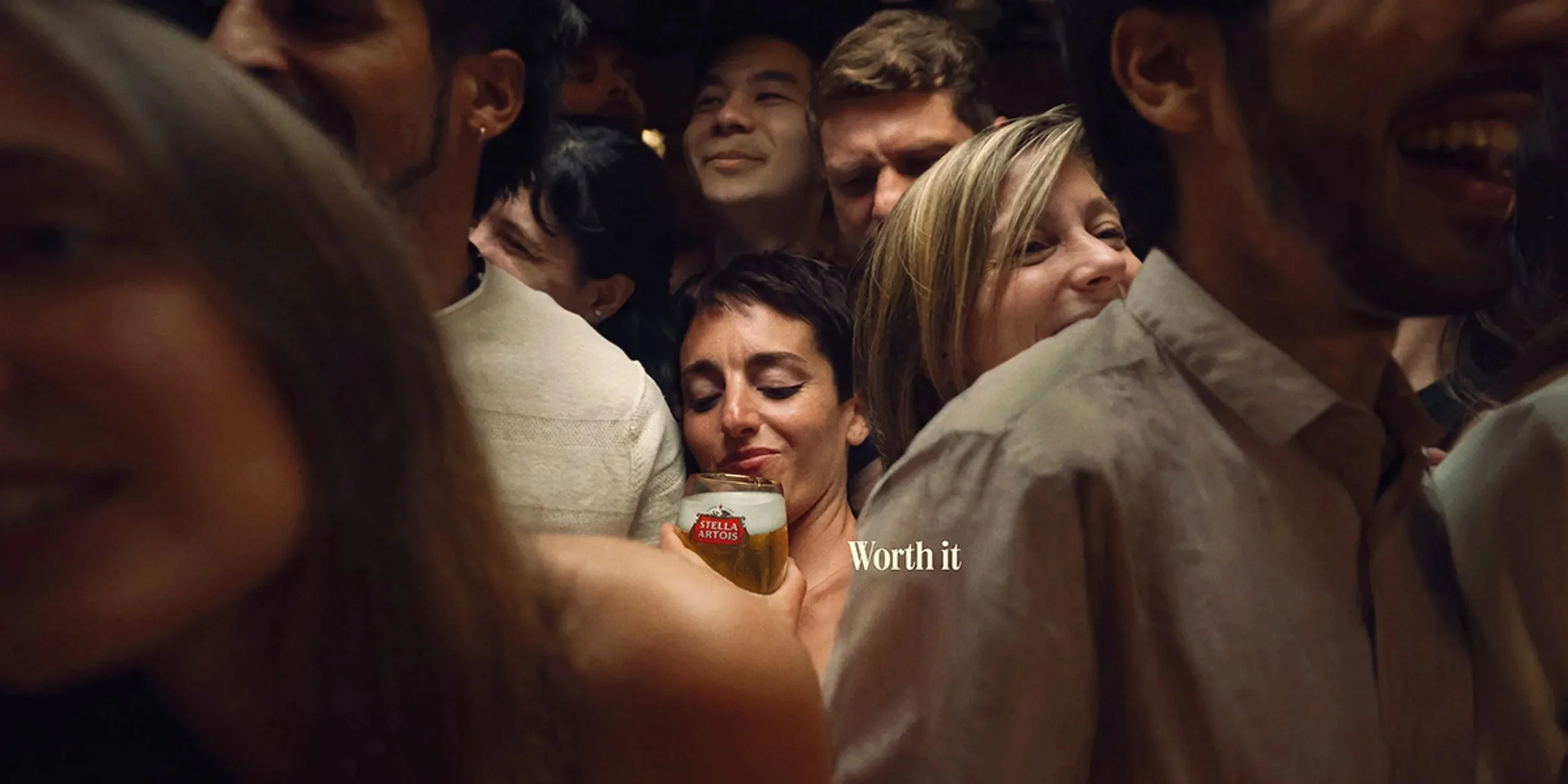

The power of recognising reality.
That's what makes ‘Claustrobars’ such a smart piece of creative strategy.
The campaign doesn't attempt to reframe overcrowded bars as glamorous.
It doesn't pretend the experience is perfect.
Instead, it recognises something millions of people already feel and builds a moment around it.
Because despite the queues, the noise and the occasional elbow in your ribs, we still go.
We're not really there for the bar.
We're there for the conversation that suddenly clicks. The unexpected laugh. The familiar faces.
Or just that first perfectly poured pint after a long week.
Stella positions itself as part of that reward. One of the little moments that make the chaos worthwhile.
It's a subtle difference, but an incredibly powerful one.
A difference born from the knowledge that great creative doesn't always have to solve problems.
Sometimes acknowledging them is enough.
In fact, audiences often trust a drinks brand more when they admit the obvious rather than pretending it doesn't exist.
People don't expect perfection. They expect honesty. That's why the visuals work so well too.
The photography feels crowded. The lighting identifies the moment. The copy is understated.
Nothing is exaggerated because it doesn't need to be.
The audience already recognises the feeling before they've even finished reading the headline.
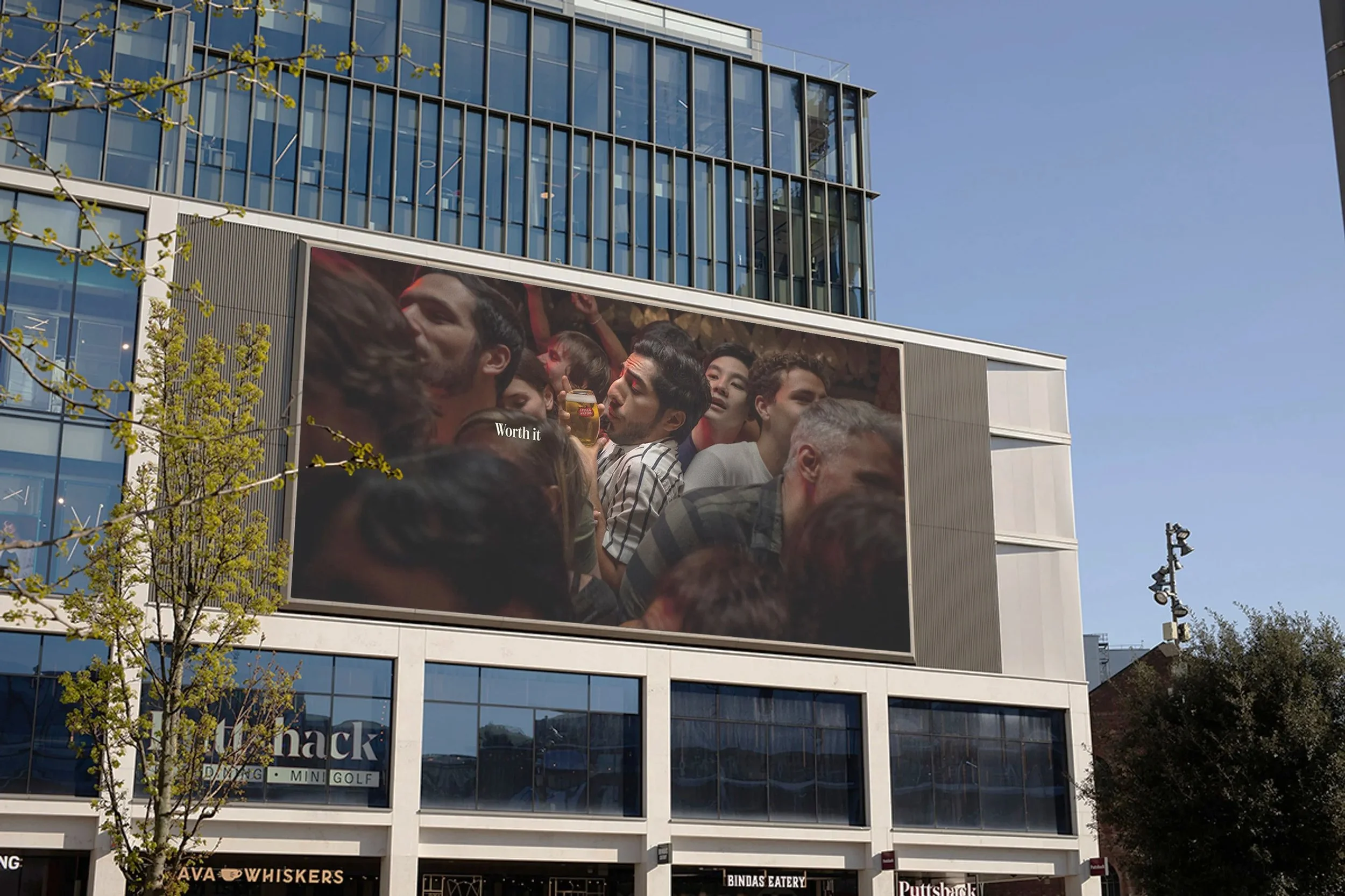
Other brands getting this right
We're seeing more brands lean into this kind of simplicity and honest creative thinking.
Guinness has long embraced the ritual of waiting for a pint to settle, transforming what could be seen as an inconvenience into one of the brand's most distinctive assets.
KFC's iconic 'FCK' campaign proved the power of honest humility. Instead of making excuses during its chicken shortage, the brand simply admitted the problem with wit – earning far more goodwill than pretending everything was fine.
Even outside food and drinks, Specsavers' "Should've Gone to Specsavers" has spent years turning everyday mistakes into memorable advertising by acknowledging flaws rather than pretending people get everything right.
Different categories. Different executions. The same principle.
Find an uncomfortable truth people already recognise and build your idea around it.
Great creative strategy starts with empathy
The best campaigns rarely begin with a clever headline or beautiful visual.
They begin with understanding people.
‘Claustrobars’ is a reminder that audiences don't need brands to create new emotions.
They need brands to recognise the ones they're already feeling.
For a creative drinks agency, that's where the biggest opportunities often lie.
Not in inventing stories.
In uncovering the truths people already live every day.
Sometimes the strongest campaigns aren't built on fantasy.
They're built on the moments that make us smile and think, "That's exactly how it feels."
And that's exactly why Stella's campaign works.
Our only critique? We’d have loved to see this campaign come to life below the line.
Imagine a brand activation with a happy hour promo that lights up the Stella taps like a beacon and activates a discount, but only when the bar becomes packed to capacity.
Stella team, if you’re reading this and it sparks a thought, we’re loving your work.
Inspired by our Creative Strategist, Dom Stancombe's Weekly Rambles
Need help building campaigns with real human insight?
Get in touch with us today.