
MAKE WHISKY WORTH OPENING
In Conversation with Alasdair Stevenson,
Co-Founder of Turntable Whisky


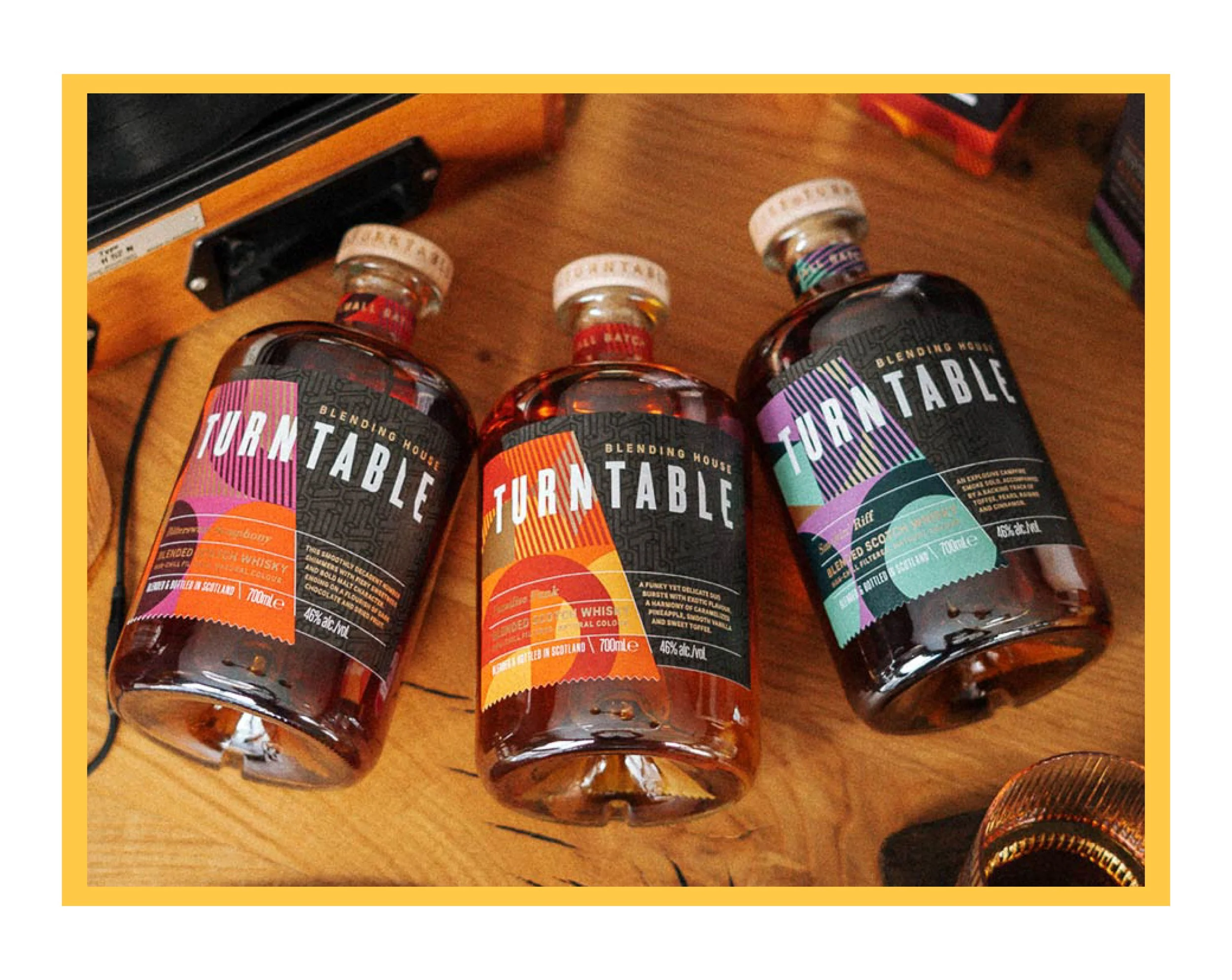
In Conversation with Alasdair Stevenson, written by our creative strategist, Megan Keith.
Read more of our interviews here
The whisky industry has never offered more choice, but it often leaves us wondering if the category has made it harder to enjoy in the process? We sat down with Turntable whisky Co-Founder, Alasdair Stevenson, to talk blending, changing drinking occasions, whisky snobbery and how the whisky industry is evolving to be more accessible to younger audiences.
For a category built on heritage, provenance and craft, tradition is understandably one of its greatest assets. But over the decades, whisky has also accumulated its fair share of rules and misconceptions – single malt over blends; neat over mixed and limited must mean better. Spoiler – it doesn’t!
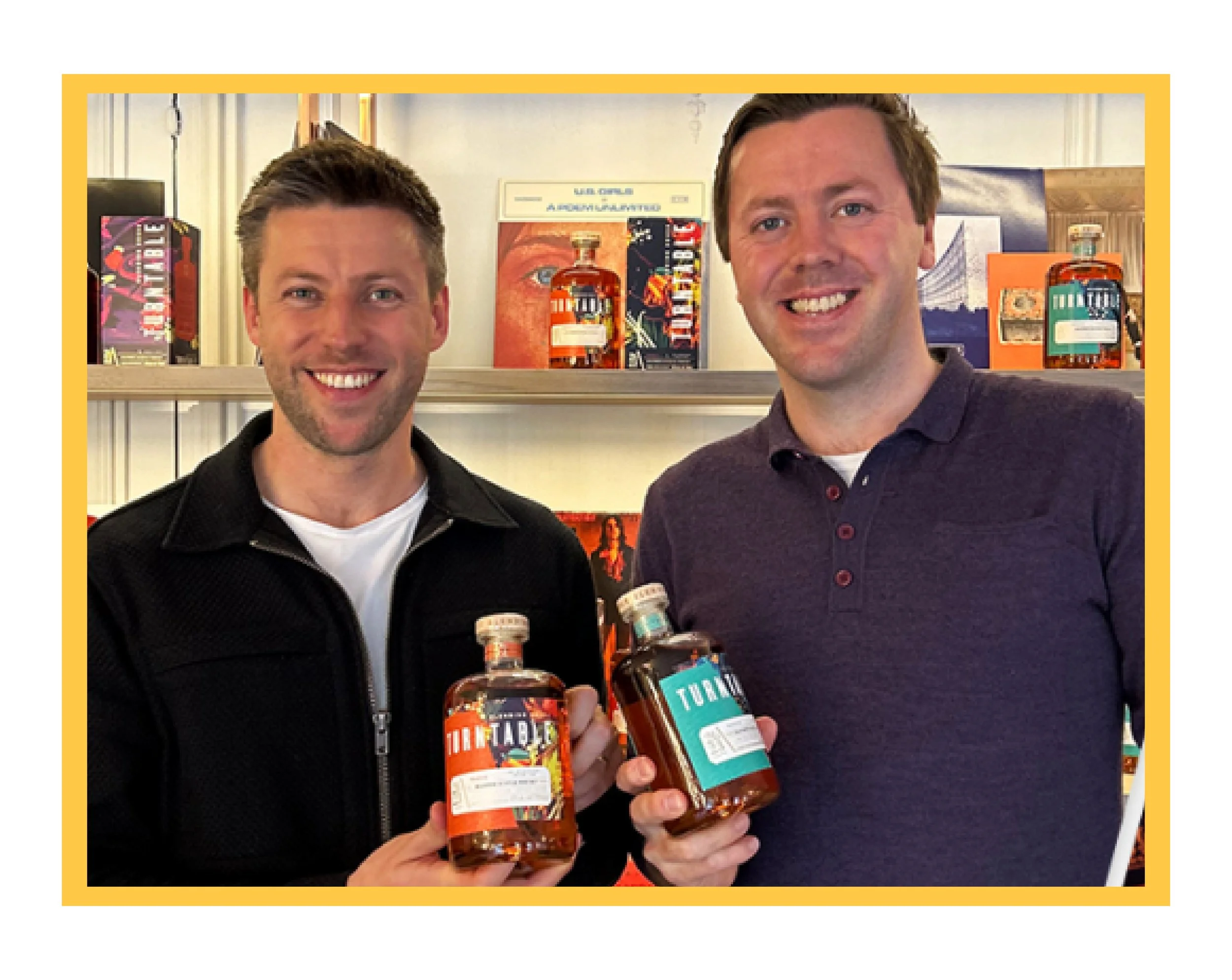
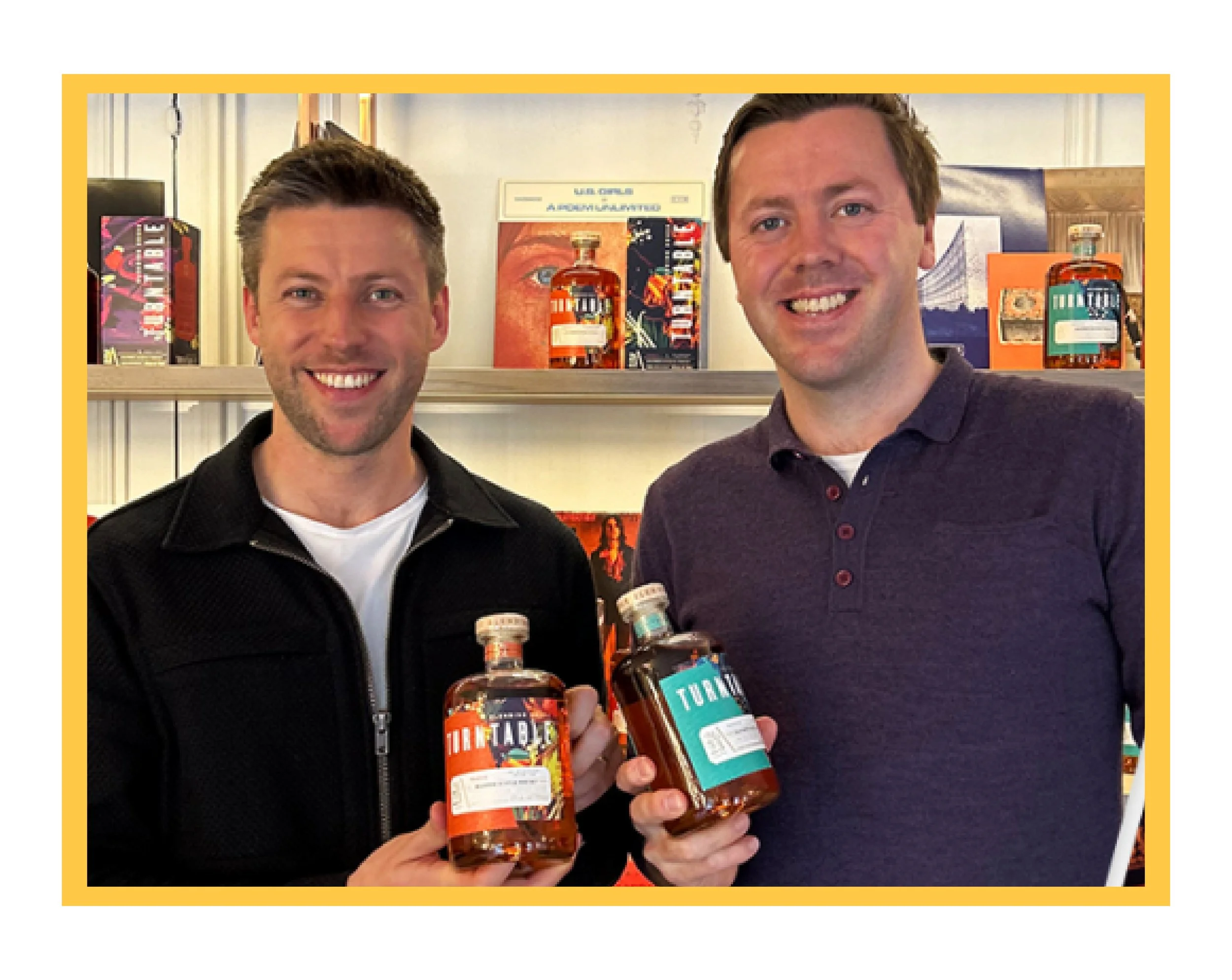
For Ally Stevenson, Co-Founder of Turntable Whisky, some of those assumptions are worth challenging to make way for fresh perspectives. Ally and his brother Gordon spent twelve years working in the whisky industry before launching Turntable in 2023. The ambition had been there for years, alongside the frustration that blended whisky was perceived as inferior to single malts.
“When you travel the whisky world, there’s often a perception that people think single malts are the quality and blended whiskies are more the volume. But, we don’t really agree with that.”
As Ally points out, blending wasn’t originally a shortcut. It was about quality, consistency and flavour combination. In fact, it was the success of blended Scotch that helped drive success of the wider whisky industry. However, as global demand grew, production strategies shifted and slowly eroded the quality of blended whiskies that gradually changed perceptions. Blending became a victim of its own success.
So, with Turntable, the brothers saw an opportunity. Take the creative freedom of blending and combine it with the care, detail and transparency consumers have come to expect of a single malt.
A strategy shaking up expectations of the category.
The misconception that blended is inferior
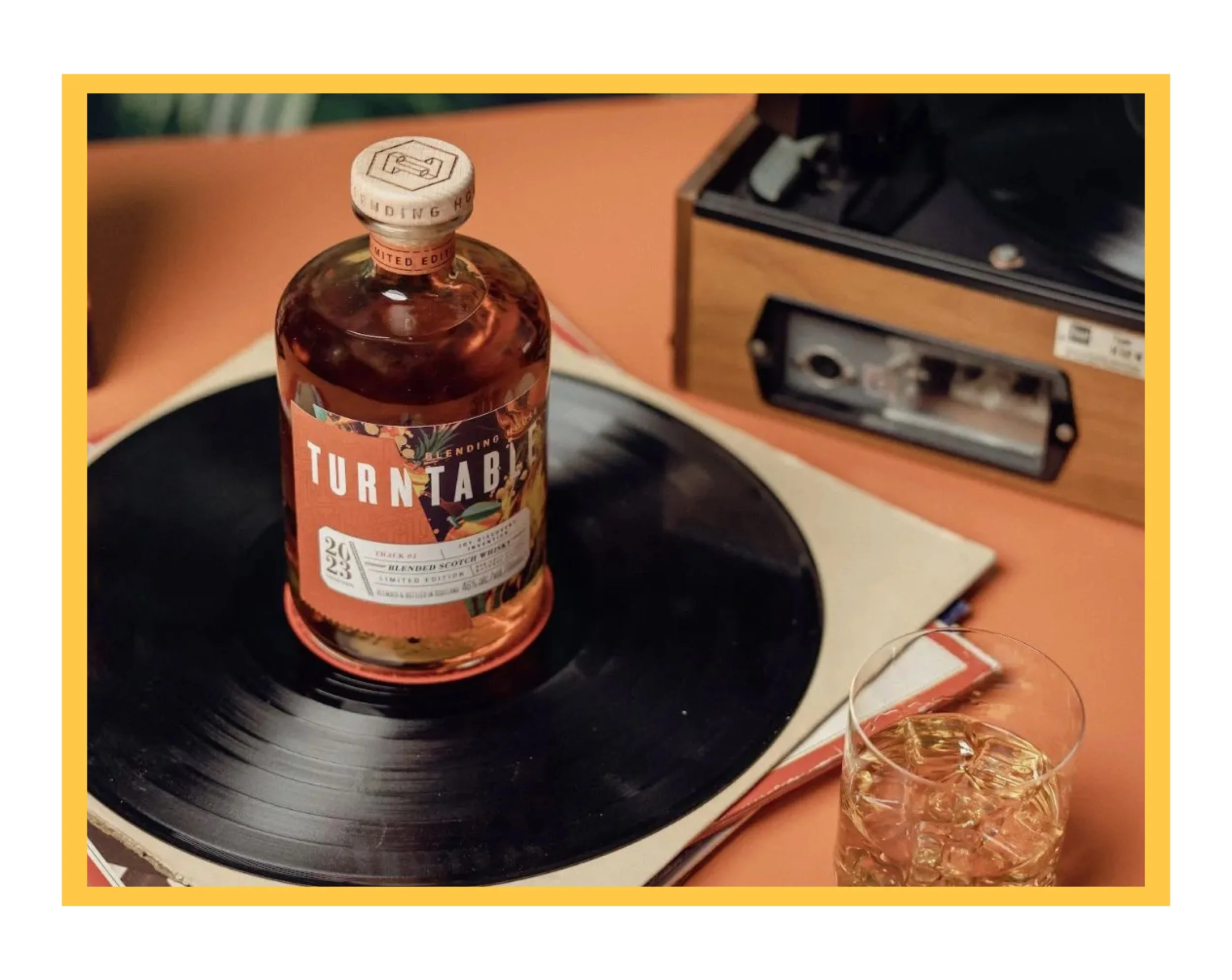
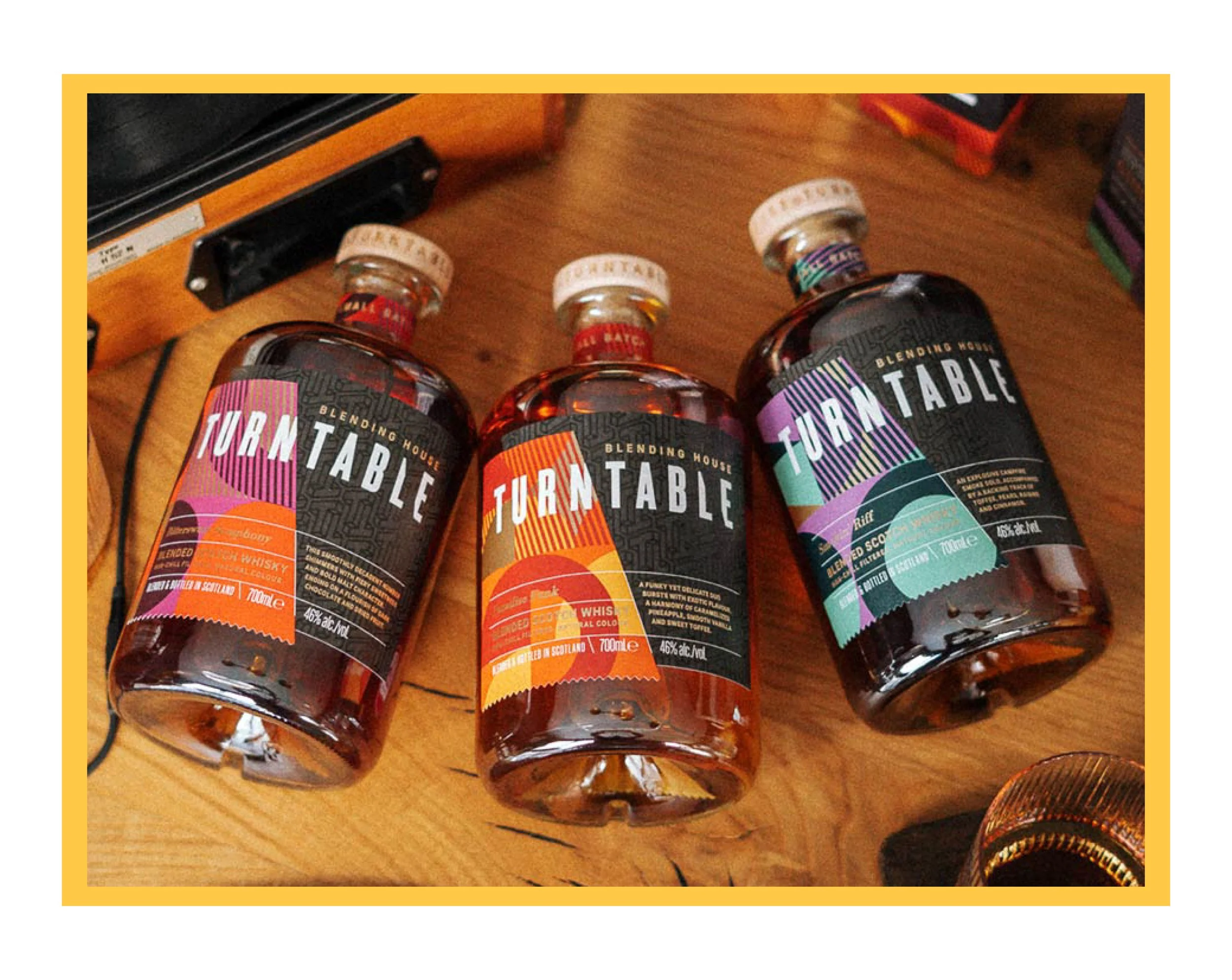
Turntable calls itself a blending house. It sources whisky from distilleries from across Scotland, matures and develops those liquids and then brings the components together to create its blends.
It’s the transparency around that process that Ally sees as particularly important. Turntable tells drinkers what percentage of a blend comes from each distillery. Rather than treating the blend as something to hide behind a brand or label, the recipe becomes part of the story.
The ultimate ambition as he says, is to create something “more interesting and flavoursome than any of the individual components.”
And the drinkers have spoken.
Ally initially expected Turntable to resonate most with newer, perhaps less traditional whisky drinkers, people led by flavour rather than age statements or established category codes. Instead, the brand has quickly found fans amongst the self-confessed whisky geeks.
Transparency, it seems, works both ways. It gives knowledgeable drinkers the detail they seek out, whilst giving newer drinkers an understanding of what they’re buying. A reminder that in a category where there is more choice than ever before, giving people a reason to choose you matters.
Whisky has a value problem
If you put yourself in the shoes of the consumer, standing in front of the whisky aisle on the shopfloor, the brands begin to look remarkably similar.
“I think the industry has probably been a little guilty of overdoing limited releases at very high prices.”
The pandemic accelerated some of that behaviour. Consumers had disposable income and were willing to spend it. From that point onward, we saw luxury and prestige limited releases multiply and prices climb.
But Ally argues, that the liquid didn’t always keep pace.
“The prices of some of these limited editions, the quality of the liquid didn’t really reflect the price that was being asked for.”
Fast forward six years, and that landscape looks very different. Consumers are becoming more spend savvy, and selective about where their money goes. Rarity alone is no longer enough.
“It’s not that people won’t part with a lot of money for a good bottle of whisky, but now I think the quality-price has to justify itself.”
For Ally, that shift is ultimately healthy. Turntable’s own philosophy can be summed up by what he wants someone to do after buying a bottle.
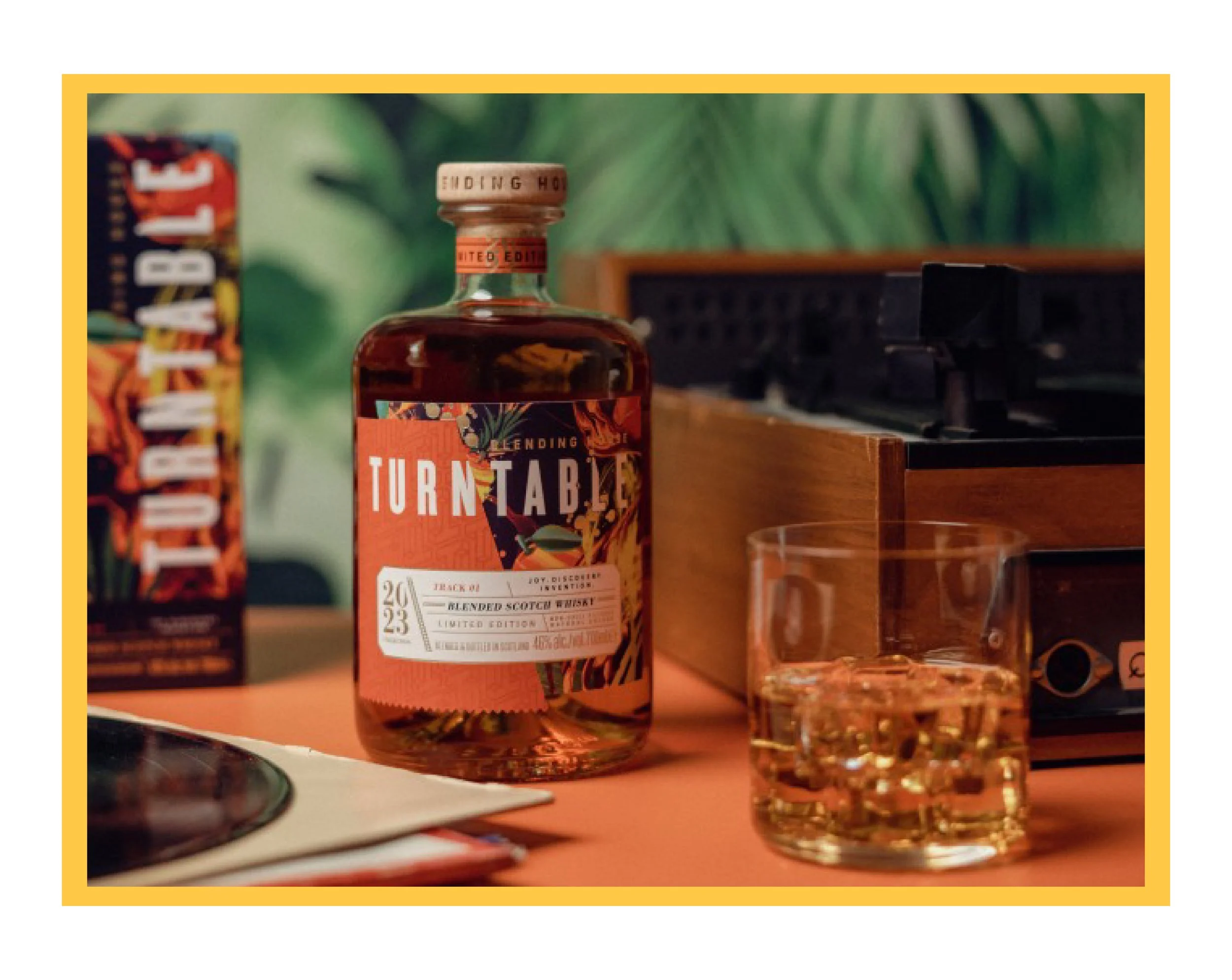
“Firstly, I want them to open it. I don’t want it to sit on a shelf and just collect dust and be for a special occasion.”
To him, the real measure of value isn’t about how long the bottle can be admired on a shelf, but where it’s enjoyed enough that someone wants to buy another.
Does whisky need to find its G&T?
If value is one barrier to whisky, occasion might be another.
The image of whisky still comes with plenty of outdated baggage: leather chairs, firesides, cigars and a dram poured neat. However, Ally sees the category with a very different lens with the category when travelling internationally.
Across markets like Japan, Hong Kong and Korea, whisky is more naturally woven into social occasions and seen in bars and restaurants alongside food. And crucially, it’s not always served neat.
Highballs in particular offer a different proposition: longer, lighter and more social.
Closer to home, Ally sees the whisky audience changing too. Whisky festivals are becoming younger and less male-dominated. Yet in the UK, whisky can still feel like something you have to make a conscious decision to drink.
“You would drink whisky when you’re specifically going out to drink a whisky. It’s not necessarily the drink of choice if you’re just out for any social occasion.”
Compare that with the gin and tonic: an order that requires little knowledge, ceremony or commitment.
So, what would whisky’s equivalent look like?
Ally points towards the highball, whisky and ginger, or similarly simple serves as an opportunity to bring Scotch into more mainstream social occasions.
He has seen the effect first-hand. At his sister’s wedding, Turntable served simple whisky and ginger ales with orange. The crowd wasn’t made up of whisky enthusiasts. That was precisely the point.
“So many people came up to us and said, ‘I’m not a whisky drinker, but I love that.’”
An indicator that perhaps whisky’s recruitment challenge, isn’t entirely about liquid.
Sometimes, it comes down to format. If someone enjoys whisky when the rules, rituals and expectations are stripped away, the opportunity isn’t necessarily to teach them how to become a “proper” whisky drinker. It’s to give them more occasions where whisky feels like a natural choice.
Finding culture outside the category
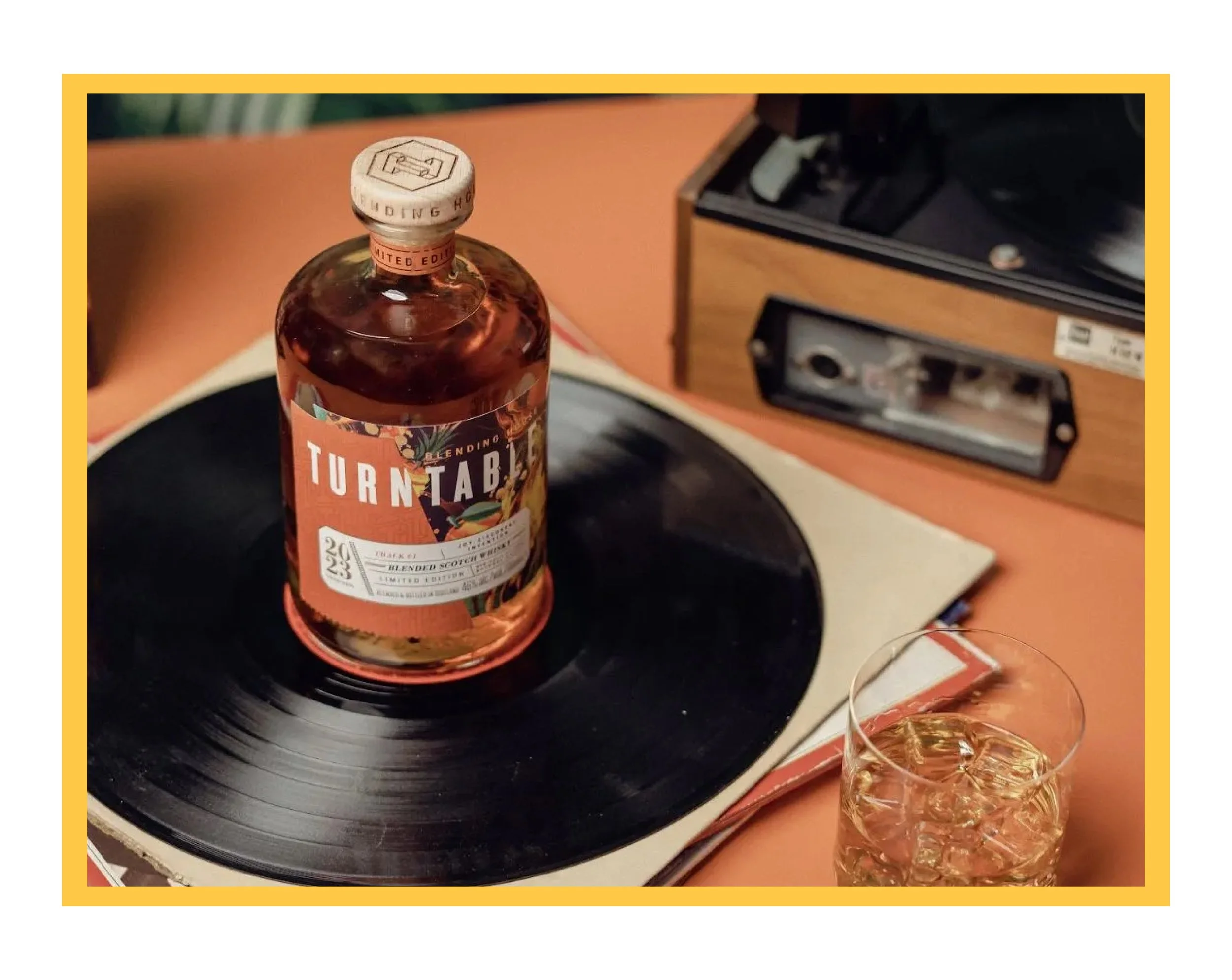
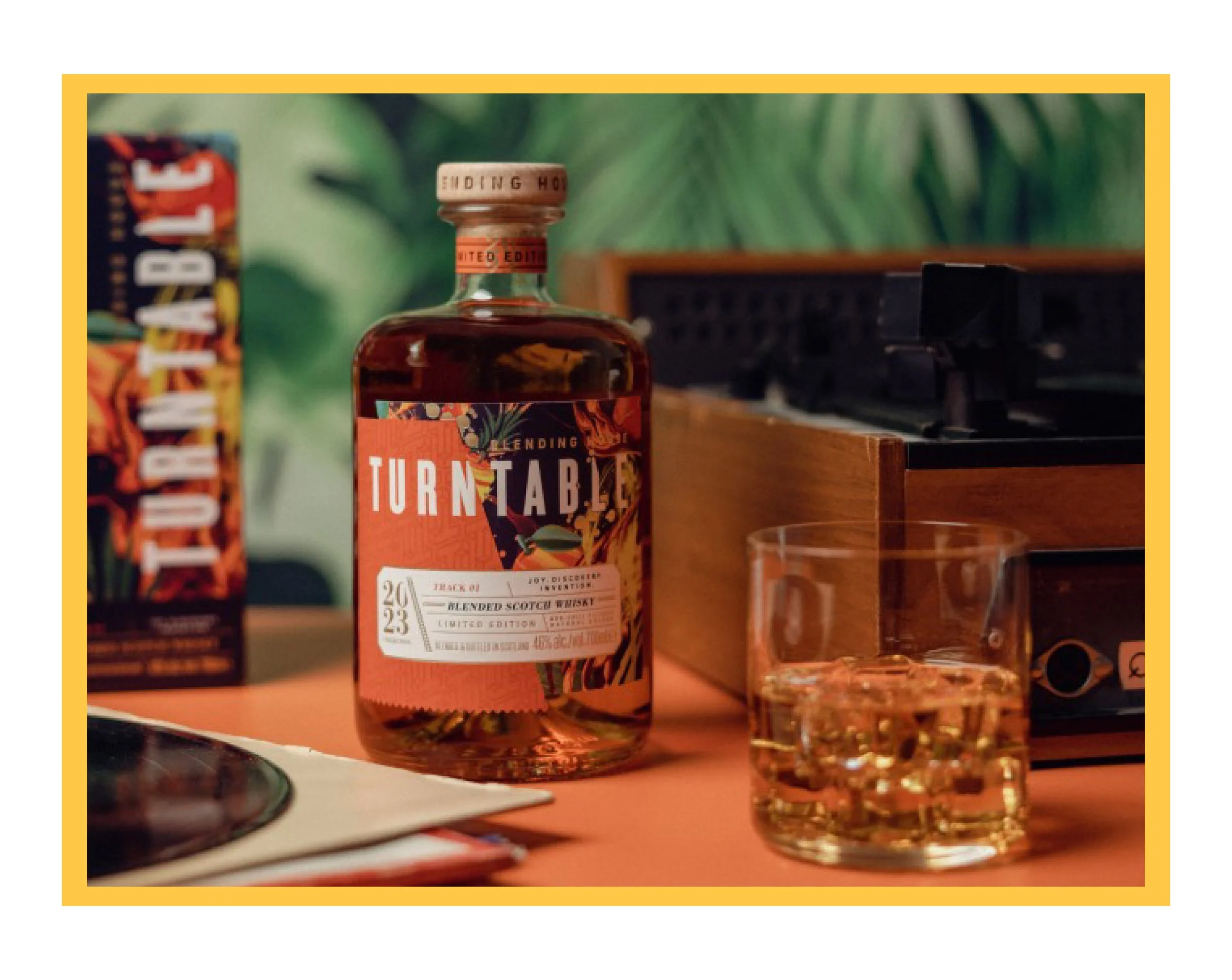
Turntable has found another route into those occasions through music. The connection is built into the brand, but Ally talks about it less as a marketing device and more as a shared passion.
“I think whisky and music pair really, really well together. And it’s a great way to connect with people in a different way.”
Rather than focusing exclusively on when someone should drink whisky, Turntable can ask what they might listen to while drinking it.
Listening bars are long established in Japan and increasingly appearing across cities across Europe, including London, each offer a particularly natural home for that thinking. They bring music, drinks and discovery together without relying on the traditional codes of a traditional whisky bar.
For brands looking to bring new people into established categories, there’s a lesson here. Modernisation doesn’t always mean trying to make the product look younger. Sometimes it’s about finding the parts of culture where it already makes sense and offers a new playground.
Storytelling without the sales pitch
For Turntable, some of the most valuable marketing happens face-to-face. Festivals give the team an opportunity to introduce large numbers of people to the liquid, but Ally sees even more value in getting 30 or 50 people into a room for a longer tasting or masterclass.
Not because it provides 90 minutes to deliver brand messaging. Almost the opposite.
“The greatest ability in that situation is to be relaxed and connect and answer questions. So, it’s not shoving brand messages down your throat from a marketing perspective. It’s just who we are, what we do, why we do it.”
The same philosophy extends into retail.
As a small brand, Turntable can’t compete with the scale, incentives or resources of the industry’s biggest players. Instead, it focuses much of its attention on global specialist and independent retailers where relationships matter.
The ambition is to turn the person behind the counter into an advocate, not because they’ve been paid to repeat a message, but because they’ve tasted the whisky, met the people behind it and genuinely want to recommend it.
I recall a visit to Copenhagen where I spotted Ally’s whiskies front and centre in a window display. Sharing that story allowed me to learn that the retailer in Copenhagen creating an entire Turntable window display had never been asked or paid to do so.
“They just did it because they loved it.”
Advertising Ally was clearly grateful for because that kind of advocacy and generosity cannot be bought.
For all the talk of storytelling in drinks, perhaps that’s what good storytelling ultimately looks like: giving people enough reason to want to tell the story for you.
Discovery, without the endless drop
There is one final tension facing whisky brands: consumers want familiarity, but they also want what’s next.
Ally sees a growing appetite for discovery among enthusiasts. People want new flavours and new experiences rather than automatically returning to the same bottle. However, more innovation doesn’t necessarily mean more products.
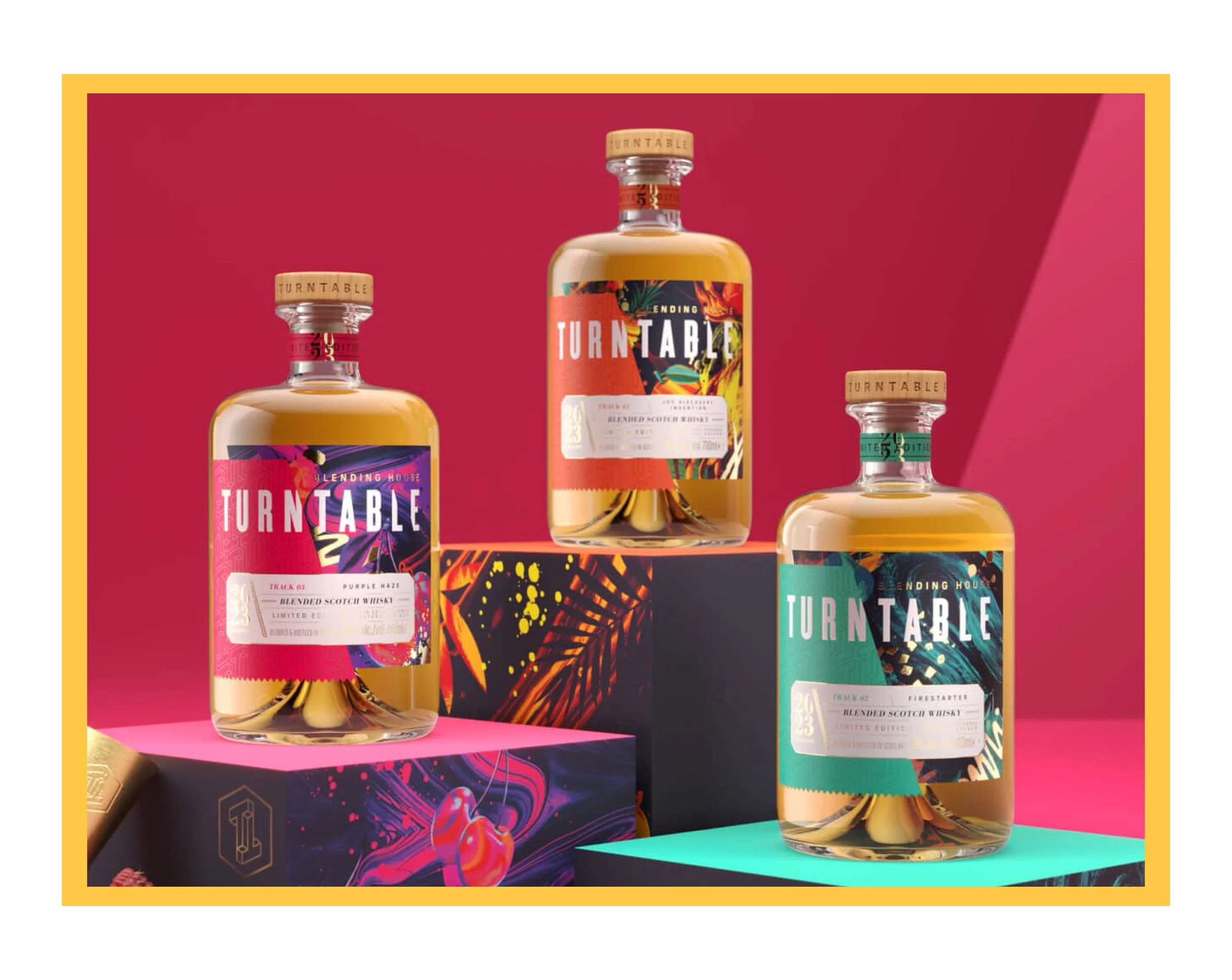
Turntable’s approach is to maintain a dependable core range while using limited releases to keep the brand moving. Crucially, those releases replace one another rather than creating an ever-expanding wall of choice.
It’s a response to an industry that perhaps became too enamoured with the words limited edition.
For Ally, the balance is about delivering “great liquid, good story at the right value.”
Perhaps that simple equation says something bigger about where whisky goes next. The category doesn’t need to abandon its history, expertise or rituals. Those are part of what makes whisky extraordinary.
Instead, it might need to become a little less precious about them. Make liquid worth drinking. Tell people what went into it. Price it fairly. Give them interesting ways and places to enjoy it.
And, above all, give them a reason to open the bottle.