
HOSPITALITY’S NEW OCCASION ECONOMY
In Conversation with jono mayes, FOUNDER of bar.made
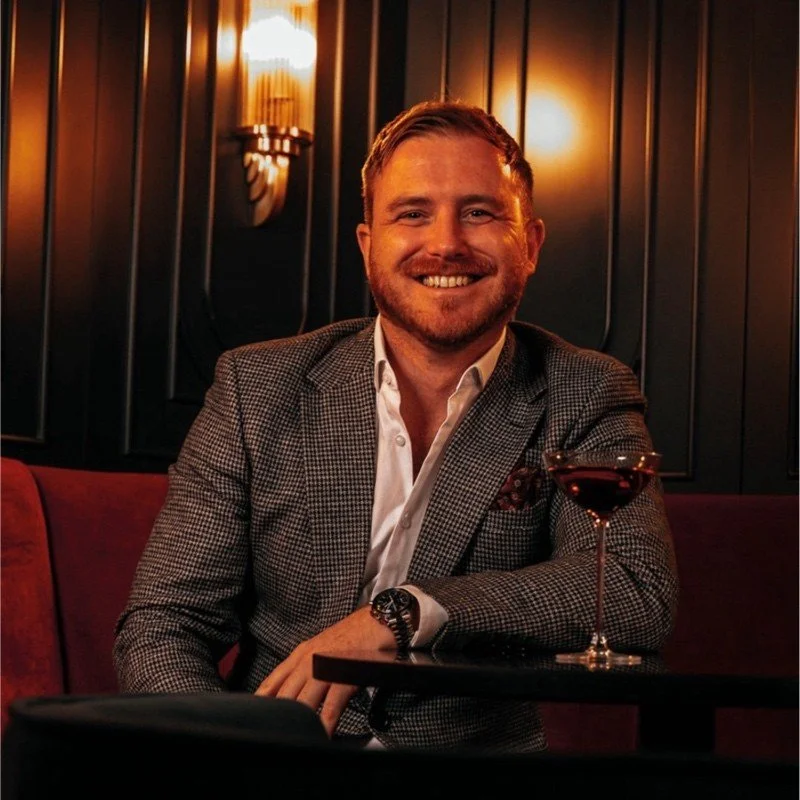
Few people have viewed the drinks industry from as many angles as Jono Mayes.
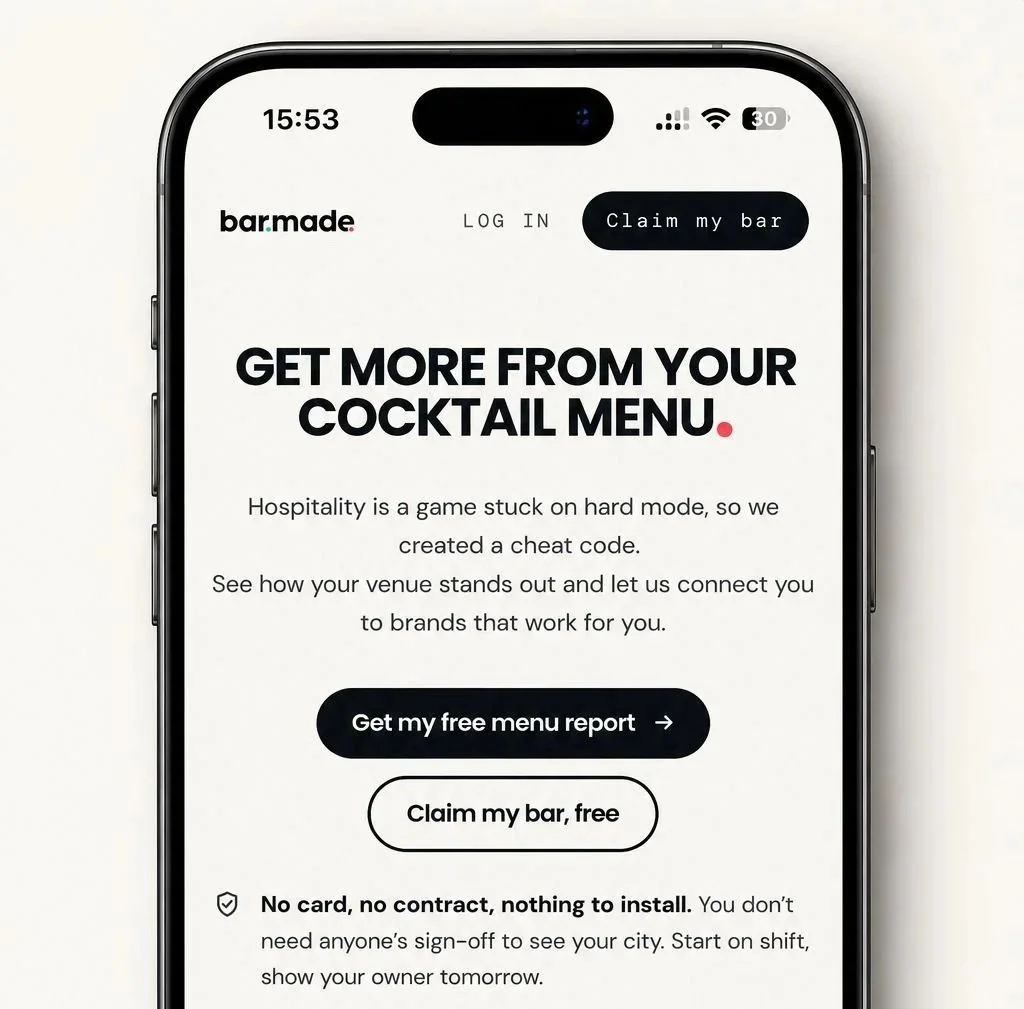
Over the past 25 years, he has worked behind bars, owned and operated venues, advised hospitality businesses, led advocacy programs and built commercial strategies for some of the industry’s biggest drinks brands. Most recently, he spent six years at Campari Group, where he helped shape the company’s approach to trade advocacy and bartender engagement before launching his hospitality intelligence platform Bar.Made. It’s a career that has given him a rare perspective on the relationship between brands, bartenders and venues and how those relationships are changing.
Today, through Bar.Made's view of menu trends, ranging, pricing and venue behaviour, he's observing consumer habits at scale. And according to Mayes, one of the most significant shifts shaping hospitality today isn't what people are drinking. It's why they're going out in the first place.
Socialising Has Become the Occasion
Much has been written about moderation, the changing drinking habits and Gen Z’s relationship with alcohol. However, Mayes sees things through a different lens.
“I think there’s a number of things here. I think one, is that drinks have to be attached to an occasion to drive trial.”
For decades, drinks occasions were often taken for granted. Going to the pub after work. Meeting friends at the weekend. Dropping into a bar without much thought or planning. Spontaneity is fading and letting the night lead people to unexpected places is becoming less automatic. Instead, consumers are placing greater value on the act of socialising itself.
"I feel actually socialising in real life is now starting to become an occasion."
At first glance, it's a simple observation. But it helps explain many of the behavioural shifts we currently see playing out across hospitality. As consumers become more selective about where they spend their time and money, getting together with friends carries more significance than it once did. Going out has shifted from being the default to becoming something people actively plan and look forward to. And when they do head out, they're looking for something that feels worth the effort.
"The act of going out the house and socialising around drinks and food and people is starting to become an occasion in and of itself, which is a really positive sign."
The Rise of the Planned Night Out
For many in hospitality, as impulse nights out decline, there’s a sense that nights out simply aren’t unfolding in the way they once did. Consumers are approaching hospitality more like a considered purchase than a casual decision. They research venues, compare recommendations, browse menus and seek validation before committing. Mayes sees this behaviour regularly.
"The spontaneity seems to be really missing because people are able to do their research before, plan a night out, know exactly the moves and the steps they're going to take to go to different venues through the course of an evening."
The trend becomes even more understandable when we take into account rising costs and the UK cost of living crisis. With cocktails regularly reaching £12-£15, consumers naturally want confidence that they're spending their money wisely. Hospitality is increasingly being evaluated in the same way people assess restaurants, concerts or other premium leisure activities.
For brands and venues alike, this creates a new challenge. It's no longer enough to simply be available, brands must have a compelling reason to be recommended and chosen.
What This Means for Brands
The shift towards occasion-led decision making is also changing the way drinks brands think about serves. Historically, the industry often searched for a hero cocktail. One signature serve capable of driving awareness, recruitment and sales across multiple audiences and venues. However, what I uncovered is that Mayes believes that approach is becoming less relevant.
"I think post-COVID, brands are not going after one magical silver bullet of a serve. They're going after a portfolio of occasion-based serves."
As drinking moments become more fragmented, consumers engage with brands in different ways depending on where they are, who they're with and what they're hoping to get from the outing. That might mean a spritz serve for a daytime gathering, a premium cocktail for a special evening out or a lower-ABV option for more mindful drinking. The objective is no longer to force consumers into one behaviour. Instead, it's to remain relevant across a range of drinking moments.
As Mayes explains, brands increasingly require "flexibility in their serve strategy" if they want to drive consumer appeal whilst meeting them where they are.
Differentiation Has Never Been More Important
If consumers are becoming more intentional with their choices, then standing out becomes more valuable than ever. That's something Mayes sees reflected in Bar.Made's data, particularly among independent operators looking to justify premium pricing and give customers a reason to choose them.
"We've got venues that are actively using those stats in meetings to make sure they're only stocking premium products that aren't stocked by more than 10% of other venues."
The thinking is straightforward. If consumers can find the same products everywhere, at a range of prices, then it's harder for venues to create a compelling reason to visit. Differentiation isn't simply about exclusivity. It's about giving consumers a clear answer to a simple question: why should I come here instead of somewhere else?
"It just feels to me like it's so much more important now to be acutely aware of your ranging of product. Not just on back bars, but also on menus."
For challenger brands, this presents a significant opportunity. As venues seek to distinguish themselves, the brands that help create that distinction become increasingly valuable partners.
Understanding Why Consumers Choose You
Although technology and data sit at the heart of Bar.Made, Mayes is careful not to frame them as the solution in themselves. The real value lies in understanding behaviour. Why do consumers choose one venue over another? Why does one serve succeed where another fails? Why do some brands naturally find their way onto menus and into people's celebrations while others don't? The operators who can answer those questions, Mayes believes, will be best positioned to succeed. When asked which metrics matter most for venues, his answer focuses less on volume and more on context.
"I would say number one is price benchmarking. Number two is ranging, what's on your back bar and what's on your menu. And then number three is understanding your points of differentiation in the market."
His reasoning reflects the broader theme running throughout our conversation. Despite purse strings being stretched, consumers aren't simply looking for the cheapest option.
"Price benchmarking is not about being the cheapest. It's about value for money."
And increasingly, value is determined by the overall experience, not simply the contents of the glass.
Looking Ahead
For someone building a technology platform, Mayes remains surprisingly optimistic about hospitality's human future. While many view AI as a disruption, he sees it as an opportunity to remove administration and create more time for genuine connection.
"One of our fundamental human needs is the need to connect and to socialise. And that is never going to go away."
In fact, he believes the next decade could see people placing even greater value on physical social experiences.
"As our lives are moving more offline, because AI and LLMs are cleaning a lot of that time up, freeing time up to do the thing we want to do, which is socialise."
If there's a common thread running through our conversation, it's that hospitality is no longer competing solely on products, prices or even serves. It's competing for people's time, attention and desire to get together in person.
For drinks brands and operators, that changes the game. Success is becoming less about simply being available and more about understanding what motivates people to leave the house and choose one venue, serve or brand over another. At Wonderworks, those are the conversations that matter most. Because the strongest brands don't just show up in meaningful moments; they help make them memorable.
In Conversation with Jono Mayes, written by our Creative Strategist, Megan Keith.